
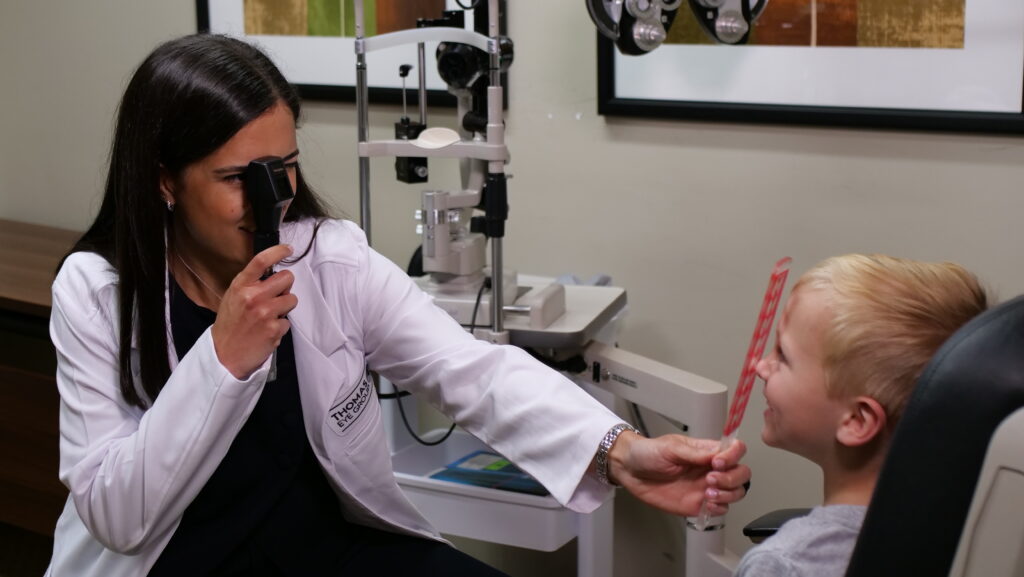
Do you know the importance of pediatric eye care? Eye exams for children help catch eye health and developmental problems early so that they can be treated in a timely manner before they have a negative impact on your child’s schoolwork or development, like hand-eye coordination. These exams also check for visual acuity, depth perception, and color blindness. Let’s take a look at why getting eye exams is so important.
Regular eye exams can help determine if your child has any visual acuity problems, eye development problems, or eye health problems. It’s important to understand that children think they are seeing normally because they have no frame of reference for ‘normal’ vision. This can lead to the mistaken belief that a child is having learning difficulties, trouble concentrating, or behavioral concerns in the classroom, when it’s really a vision problem.
These age-appropriate exams assess visual clarity, eye alignment, focusing ability, depth perception, eye movement, and overall eye health. Early detection of conditions such as nearsightedness, lazy eye, crossed eyes, and other vision disorders can help prevent long-term complications and support healthy visual development.
Regular eye exams also help children perform their best in school, sports, and everyday activities by ensuring they can see comfortably and clearly at every stage of growth.
Children should be screened for eye problems and referred to a pediatric ophthalmologist for a complete eye exam if needed. A doctor or trained health care provider should first check their eyes when they are born, and then do a second screening exam within their first year of life, usually between 6 and 12 months of age. Early exams help ensure your child’s eyes are developing properly and can help identify any potential vision concerns before they begin affecting your child’s learning or development.
Most children should have another eye exam at age 3 and again around age 5 or 6, before starting school. School-aged children should continue receiving regular eye exams every one to two years, depending on their vision needs and whether or not they wear corrective lenses. If you’re unsure as to how often to schedule your child’s eye exam, our pediatric ophthalmologists at Thomas Eye Group can help determine how often your child’s eyes need to be examined.
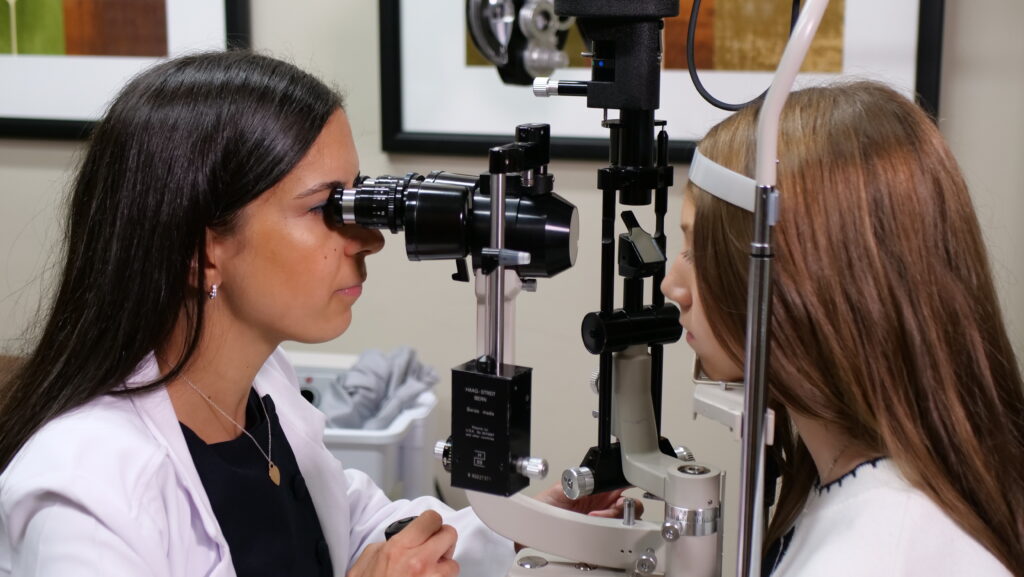
At Thomas Eye Group, our pediatric eye specialists, like Jerry E. Berland, MD, and Ellen Mitchell, MD, diagnose and treat a wide range of childhood vision problems and eye conditions, including:
In order to catch vision trouble early, it’s important to watch for a few signs. If your child is having problems seeing clearly, you might notice:
Even if your school offers vision screenings, it’s still important to schedule regular eye exams for your child. This is because vision screenings are not a substitute for a comprehensive pediatric eye exam performed by an ophthalmologist. You should bring your child to a children’s eye doctor if they fail a vision screening, the vision screening cannot be done, if referred by their doctor or nurse, if your child has a vision complaint or has abnormal vision behavior, or if your child has a learning disability, developmental delay, neuropsychological condition, or behavioral issue.
School screenings are designed to identify basic vision concerns, such as reduced distance vision, but they may not detect many common childhood eye conditions. Problems involving eye coordination, focusing ability, depth perception, eye health, and certain learning-related vision issues can often go unnoticed during a simple screening.
A comprehensive pediatric eye exam evaluates your child’s overall visual development and eye health in much greater detail. This allows pediatric eye specialists to detect conditions early and recommend treatment before vision problems begin affecting school performance, reading ability, sports participation, or daily activities.
When choosing the best time to schedule an eye exam for your child, we often recommend choosing a time when your child is awake and alert. However, we also do all we can to ensure that your child is happy and entertained. That’s why our locations often have amenities like kid-friendly environments with movie theaters and playrooms.
At Thomas Eye Group, we have:
At Thomas Eye Group, you can expect us to work as a team to give your child state-of-the-art care from caring, knowledgeable eye doctors. We serve pediatric patients at eight of our locations. To schedule a pediatric eye exam in the Atlanta area, call us at 678-892-2020 or use our online form.
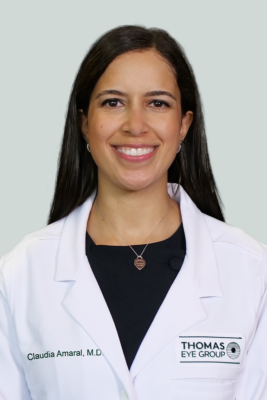
Dr. Claudia Amaral is a board-certified pediatric ophthalmologist specializing in children’s eye conditions, including amblyopia, strabismus, cataracts, and tear duct abnormalities. She completed her ophthalmology residency and pediatric ophthalmology fellowship at Emory University and also evaluates adults with strabismus.