
By Dr. Alan Brown

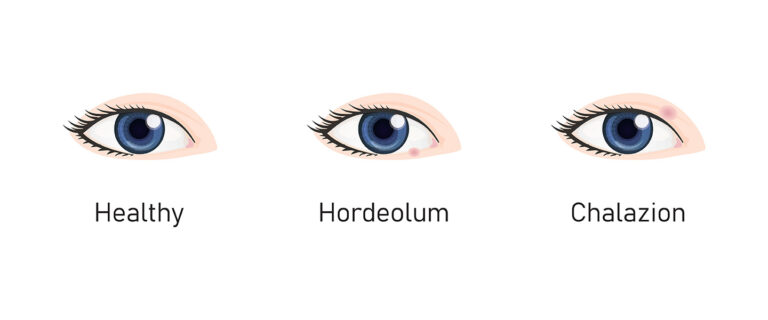
If you are experiencing a red lump on your eyelid, it can understandably be alarming. These blemishes can be uncomfortable or even painful to the point that they impact your vision and everyday life. These inconveniences are known as styes (or hordeolum) and chalazions, but what exactly is the difference between a stye and a chalazion? Even more importantly, how can you prevent styes and chalazions or treat them?
In order to understand what a chalazion is, it’s important to have a basic understanding of the eye. Your eyes require a coat of oil to help protect and stay hydrated. This oily coating is produced by the meibomian glands. When these glands become clogged, it can lead to the formation of a chalazion (pronounced kuh·lay·zee·uhn).
Chalazions can be uncomfortable, but are typically not painful. They usually occur a bit deeper onto the eyelid rather than on the edge.
While styes and chalazions can appear similar, there are a few key differences. Styes will typically form closer to the edge of the eyelid. While chalazions are formed by simple oil blockages, styes are bacterial infections. Due to this, they may contain a small pus-filled tip much like a pimple. In contrast to chalazions which are not painful, a stye may be mildly painful.
Applying a warm compress to the affected eyelid 4-6 times per day can make for an easy at-home remedy for both styes and chalazions. This works by softening and loosening any blockages of the oil blocking your meibomian glands, allowing your eye to drain more effectively.
To create the compress, simply run a washcloth under hot water. Wring the cloth out and apply to the eyelid for 10 to 15 minutes.
Gently massaging your eye can also help to soften any blockages and help to get it draining properly again, assisting in the recovery of both styes and chalazions.
In order to avoid further discomfort from styes or chalazions as well as to maintain good eye hygiene, your doctor may recommend discontinuing contact lens wear or eye makeup until the stye or chalazion is healed.
Since styes are bacterial infections, your eye doctor may prescribe an antibiotic to help clear them up if they are not resolving on their own.
In rare circumstances where a chalazion does not clear up on its own, it may require a chalazion excision. This a surgical procedure that is performed by an ophthalmologist where the chalazion is cut out and dissolvable sutures are applied.
While anyone can experience a chalazion or stye, there are certain practices that you can follow to prevent them from occurring in the first place. In order to prevent chalazions and styes from forming, it is important to maintain good hygiene around the eyes. This includes:
If you are experiencing a stye or chalazion that is impacting your vision or daily life, or have a child experiencing a pediatric chalazion, we recommend consulting with one of our eye care experts for assistance. Recurring chalazions or styes may also be an indication of other risk factors varying from skin conditions to cancer, so it is important to see an optometrist or ophthalmologist if the issue persists. Click the button below to schedule an appointment with us online or call 678.892.2020 today.
Alan D. Brown, O.D. is a Fellow in the American Academy of Optometry. He joined the medical staff of Thomas Eye Group in 1998. Dr. Brown specializes in pediatric and adult medical eye care. He provides eye exams, contact lenses and the diagnosis and treatment of medical eye problems for adults and children.