
By Dr. A.C. Flynn

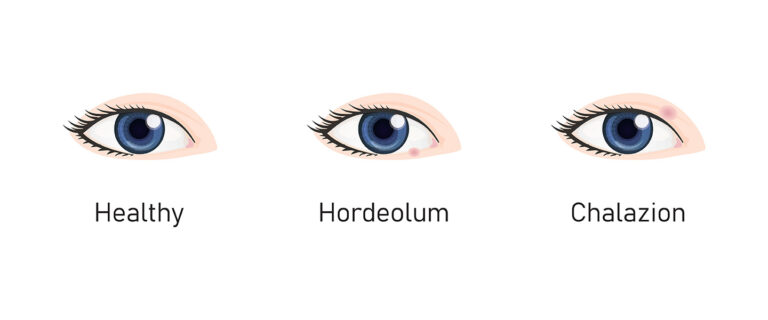
Eyelids are complex structures, complete with nerves, muscles, glands and hair follicles. For this reason, eyelids lumps and bumps are common but can often be uncomfortable and cosmetically unpleasant. Styes (technical term – hordeolum) and chalazion are both lid bumps with different reasons for occurrence.
The main difference is a stye (hordeolum) is an acute, infected and often painful lid bump and a chalazion is a chronic, non-infectious, and usually painless lid bump.
Styes are typically a rapid onset bump with accompanying redness and swelling. Depending on the size and location, they are typically treated with a combination of warm compresses followed by gentle massage and antibiotic oral or topical medications.
Chalazion develop slowly, typically over weeks. They are firm, more compact and without pain and redness. Chalazion can also be treated with warm compresses and lid massage, but more persistent cases may require a dose of steroids.
In both cases, minor in-office procedures may be needed to get rid of stubborn lid bumps.
While anyone can experience a chalazion or stye, there are certain practices that you can follow to prevent them from occurring in the first place. To prevent chalazions and styes from forming, it is important to maintain good hygiene around the eyes. This includes:
The most common cause of styes and other issues of the lid margin is condition called blepharitis. The glands and hair follicles of our eyelids have natural bacteria and microbes that inhabit them. When there are too many of these microbes, infections occur leading to trouble – such as styes, conjunctivitis (aka “pink eye”) and general eye irritation.
Amber Carissa “A.C.” Flynn, O.D. is a board-licensed comprehensive optometrist serving patients at our Newnan and Peachtree City locations. She offers a range of services including comprehensive eye exams with prescriptions for eyeglasses and contact lens, and treatment of various ocular conditions such as dry eye disease, macular degeneration, glaucoma, and diabetic eye disease, among others.